+40.232.261.950
office@dacorumgrup.ro
Bd. Chimiei, no. 89, Iași, România

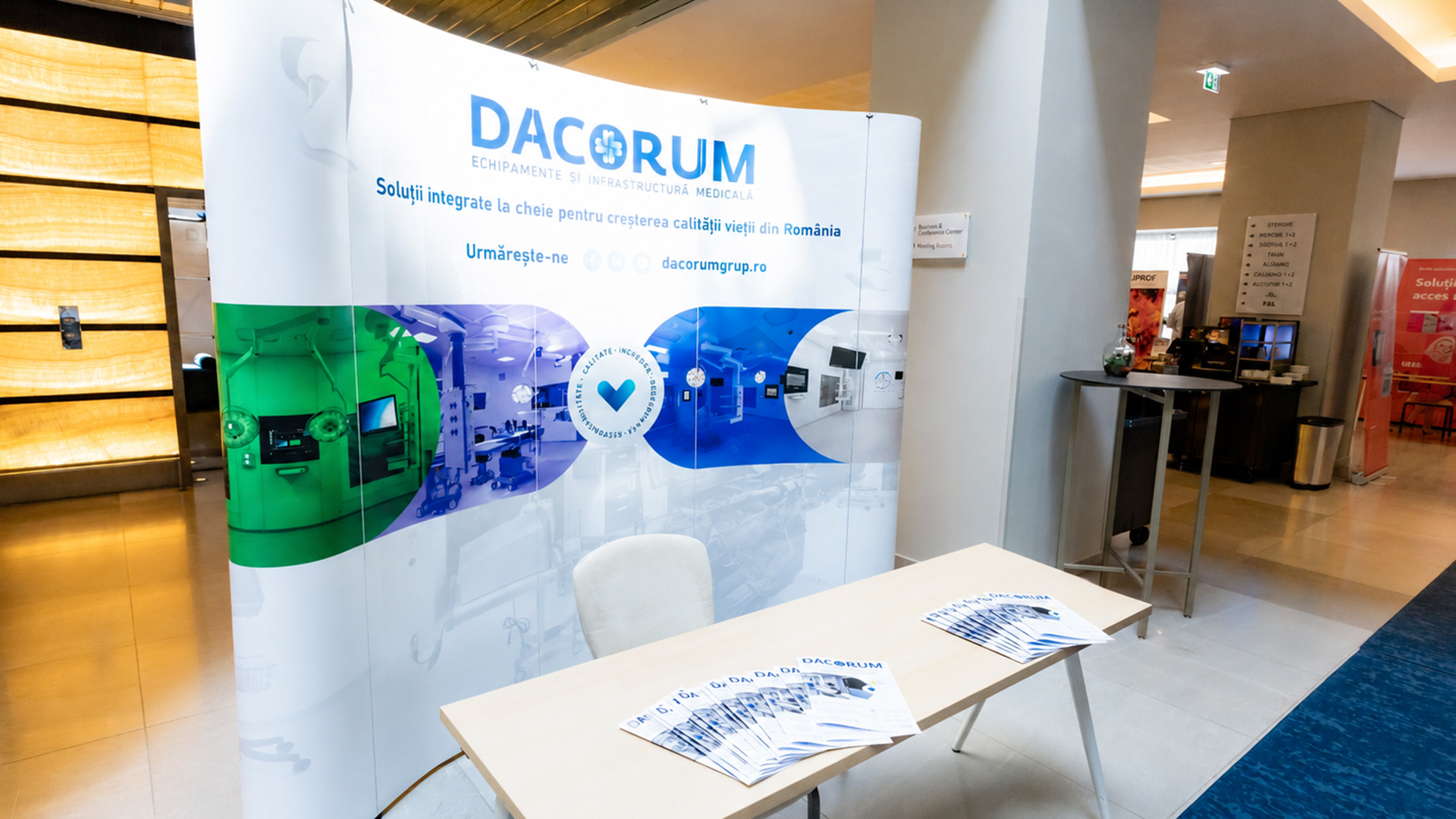
DACORUM at SHARE Experts Meeting 2026: modern medical spaces at the intersection of architecture, technology and clinical workflow

“In the end, everything connects: people, ideas, objects. The quality of the connections defines the quality of the whole.”

Charles Eames

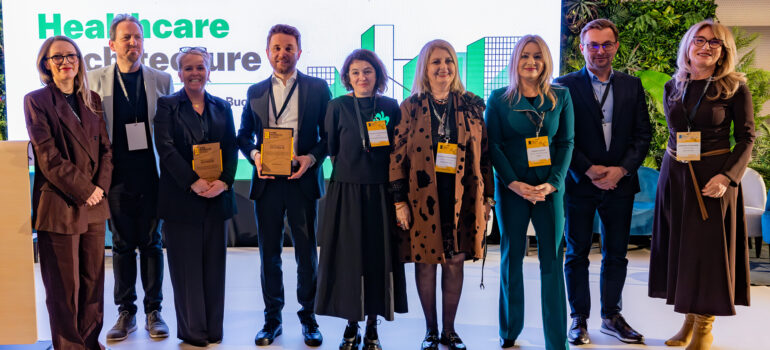
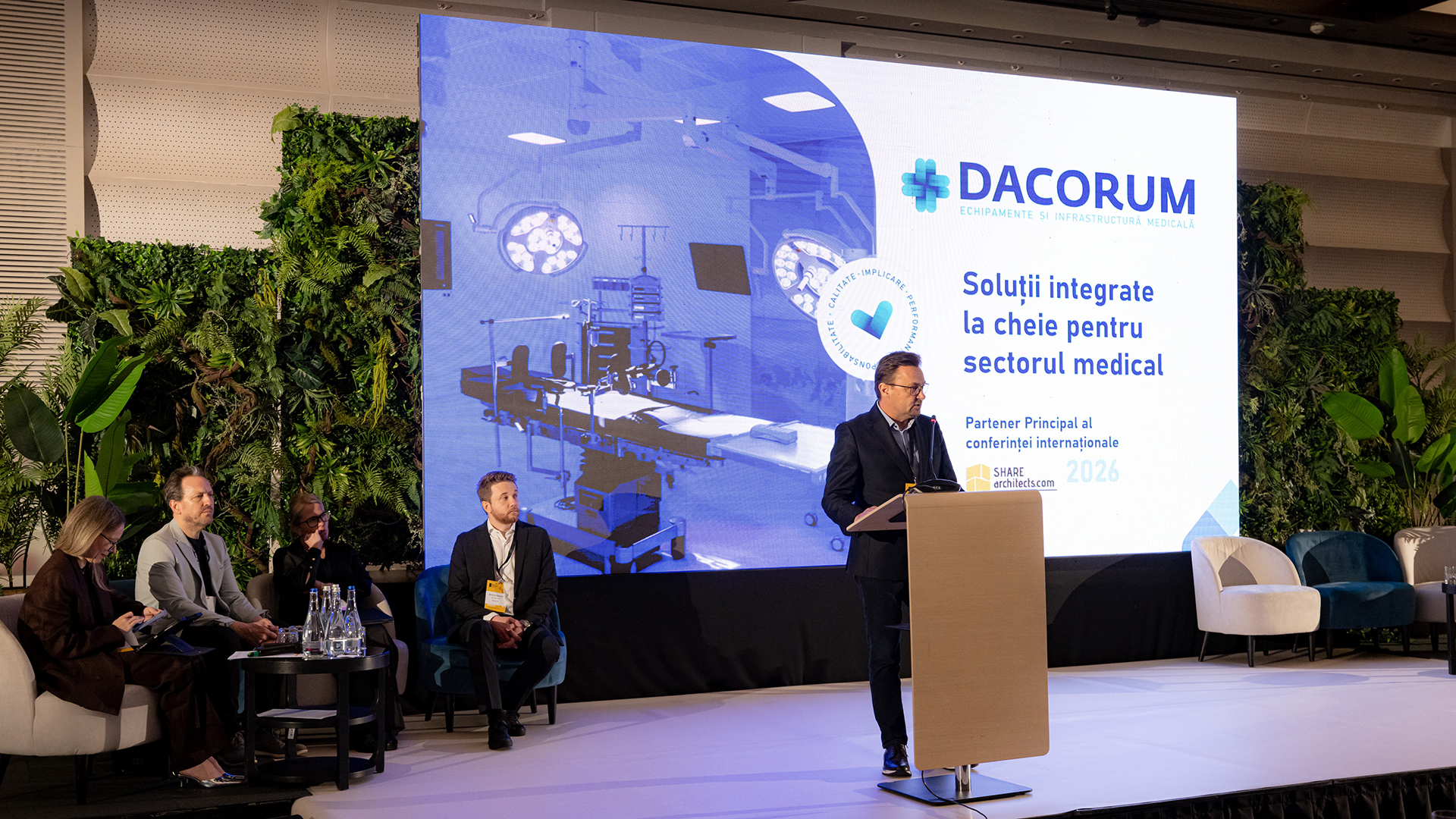
DACORUM Grup’s participation in the 2026 edition of the SHARE Experts Meeting: Healthcare Architecture conference represented a new opportunity to contribute to the conversation about the future of medical infrastructure in Romania.

The event brought together architects, designers, healthcare specialists, infrastructure developers and companies involved in the creation of modern medical spaces.

The discussions focused on essential topics for the evolution of the field: hospital functional planning, the quality of medical spaces, the integration of contemporary technologies and the adaptation of projects to the real needs of patients and medical staff. For DACORUM, this participation was more than a presence in a professional setting. It was a confirmation of the direction we believe in: high-performance medical spaces are not built only through advanced equipment, but through the right connection between architecture, technology, infrastructure and clinical workflow.

From the equipment to the functional space

In previous years, DACORUM demonstrated commitment and performance through solutions dedicated to operating rooms, ICU environments, hospital wards and complex medical infrastructure. At the 2026 edition, alongside the solutions dedicated to the operating room, our main focus was directed toward medical imaging spaces, from angiography and CT to MRI and digital radiography (DXR).

This choice reflects an increasingly important reality in today’s medical infrastructure: imaging can no longer be seen only as a technical area of the hospital. It is a central point in diagnosis, treatment, clinical decision-making and operational workflow.

We design spaces, not just equipment

For those less familiar with hospital architecture, creating an imaging space may seem to mean building a room into which the equipment is later installed. In reality, this is only the final visible result. The process begins much earlier, with the analysis of equipment placement, technical requirements, patient routes, medical staff activities and the infrastructure required for the entire system to function coherently.
From patient preparation to post-procedure activities, medical imaging spaces must be designed as functional systems, not merely as rooms that accommodate equipment.

Each area contributes to a safe, coherent and efficient medical workflow: the examination room, the control room, the technical spaces, the preparation areas and, where applicable, the recovery areas.

In this type of project, the layout follows three essential objectives:


    • Fast access to information: Images, patient data and procedure parameters must be available to medical staff exactly where they are needed.

    • Efficient operational workflow: The routes of patients, staff and equipment must be organized so that medical activity can take place without bottlenecks.

    • Ergonomics for the medical team: The positioning of equipment, monitors, consoles and work areas must support precision, comfort and the speed of clinical decision-making.

This integration is achieved through detailed planning, adapted to each type of equipment and each usage scenario. In imaging, differences of just a few centimeters can influence access, safety, visibility and the medical team’s freedom of movement.

That is why spaces are designed down to the millimeter, taking into account equipment requirements, the possible examination or treatment scenarios, room circulation and the safety standards required for both patients and staff.

What the SHARE Experts Meeting experience confirmed for us

One of the most valuable directions of the conference was the emphasis placed on the fact that medical architecture cannot be separated from the real function of the space. A hospital is not just a building, but a living infrastructure, where every design decision influences how patients are received, how medical staff work, how equipment is used and how medical services are delivered.
The discussions held during the event confirmed an essential idea for DACORUM’s activity: high-performance medical spaces appear when design does not start only from surfaces and partitions, but from people, routes, activities, working times and safety.

In this respect, we found in the themes of the conference the same logic that we apply in our own projects: the transition from concept to implementation must be supported by a precise understanding of how the space will be used every day.
For us, it was particularly relevant to see how the dialogue between architects, healthcare specialists, designers and integrators is becoming increasingly important in the development of medical infrastructure.

Technology is advancing rapidly, but its value depends on the quality of the space in which it is integrated. A high-performance piece of equipment needs correct infrastructure, easy access, visibility, ergonomics, logical circuits and safe operating conditions. Otherwise, its technological potential remains limited by the space that surrounds it.
Medical space as infrastructure for decision-making, safety and efficiency

For us, the main conclusion of this experience is clear: the future of medical spaces does not lie only in the modernization of equipment, but in the ability to create integrated environments adapted to clinical reality.

In an imaging room, an operating room or an ICU environment, every element has a role: the position of the equipment, the control room, the patient route, staff access, technical infrastructure, lighting, finishes, safety and system integration.

When these elements are designed together, the space is no longer just a physical setting. It becomes a working tool for medical staff and an active part of the quality of medical care.

A shared direction for medical infrastructure in Romania

SHARE Experts Meeting 2026 highlighted the need for an interdisciplinary approach in the development of medical projects. Architecture, engineering, medical technology and clinical experience must work together to create spaces that are safe, efficient and prepared for the future.

For DACORUM, this direction is already part of our way of working. Through our projects, we aim to deliver not only equipment or fit-out works, but fully functional medical spaces, in which every component is integrated with a clear purpose.

Our participation in SHARE Experts Meeting 2026 gave us the opportunity to present this vision in a relevant professional context and to continue the dialogue about the quality standards required in Romanian medical infrastructure.

For DACORUM, this is the way: medical spaces designed as integrated systems, built for safety, efficiency and clinical performance.
Citește tot
patologie digitală

Digital pathology: a new European standard for fast, accurate and collaborative diagnostics

Digital pathology: a new European standard for fast, accurate and collaborative diagnostics

The digital transformation of pathology is one of the most significant changes in modern medicine. According to experts from the European Society of Pathology, workflow digitization is not merely a technological evolution but a clinical necessity, directly impacting diagnostic quality and specialist collaboration. In a European context where case numbers are increasing, case types are diversifying, and pressure on laboratories is intensifying, digital pathology emerges as a solid and mature solution.

Why Europe needs a digital system in pathology

Traditional pathology, based on conventional microscopy, requires physical manipulation of slides, extensive manual processes, and a large volume of repetitive tasks. Digitization, on the other hand, allows microscopic slides to be converted into high-resolution digital images that are easy to access, share, and analyze.

This shift brings immediate benefits:


  • faster access to cases, including remotely;

  • the ability to collaborate between pathologists from different centers;

  • standardized workflows without technical variations;

  • efficient organization of digital archives;

  • improved data security and a reduced risk of losing physical materials.

Additionally, digitalization becomes an essential foundation for future AI-based applications.

The role of artificial intelligence in the future of pathology

One of the most important aspects highlighted by European experts is that digital pathology paves the way for the widespread adoption of artificial intelligence tools. These solutions can automatically analyze digital images, identify subtle anomalies, and prioritize cases that require urgent attention.

AI does not replace the pathology specialist but supports them in:


  • faster identification of lesions;

  • reducing human errors;

  • standardizing diagnoses;

  • analyzing large volumes of data in a short time;

  • creating a solid foundation for research and clinical studies.

The European Society emphasizes that successful implementation requires adequate infrastructure, robust quality protocols, trained personnel, and reliable data management policies.

Challenges in the implementation of digital pathology

The transition from traditional to digital workflows involves substantial investment and rigorous planning. Among the challenges highlighted by experts are:


  • data storage capacity (digital pathology files can be extremely large);

  • network speed and IT infrastructure stability;

  • ensuring interoperability between systems;

  • clinical validation of new technologies;

  • continuous training for medical staff;

  • updating internal procedures to support digital workflows.

Despite these challenges, the long-term benefits far outweigh the initial efforts. Digitized laboratories report better organization, shorter turnaround times, and improved collaboration among specialists.

Official recommendations of European experts

According to the European Society of Pathology, digitalization should be approached gradually and strategically. Laboratories should begin with internal needs assessments and pilot projects, ensure critical infrastructure, and actively involve IT teams, pathologists, and decision-makers.

European institutions, funding bodies, and health authorities are encouraged to support this transition through dedicated projects, best practice guidelines, and targeted investments.

In conclusion…

Digital pathology is no longer a future technology but a present reality that is reshaping how diagnoses are made. Europe is at a pivotal moment, and the adoption of this technology—combined with the power of artificial intelligence—has the potential to transform the quality of medical care, the speed of intervention, and the level of collaboration among specialists.

Implementation may be complex, but the advantages are undeniable. Laboratories embracing digitalization today are positioning themselves as leaders in tomorrow’s modern diagnostics.

Citește tot

Digitalization of medical laboratories: a new standard for accuracy, efficiency and collaboration

The digitization of medical laboratories is one of the most important directions for modernization in the health system. As the volume of analyses increases and the complexity of cases increases, laboratories are forced to adopt digital solutions that optimize workflows and reduce pressure on staff. From biochemistry and haematology to microbiology and pathological anatomy, digitalization creates the premises for a safer, faster and more accurate working environment.

Why laboratories need digitalization

Traditional work models rely on manual processes, paper documents, repetitive data entry, and time-consuming checks. These procedures increase the risk of error, slow down the reporting of results, and limit the ability of laboratories to cope with modern requirements.

Digitalization radically changes these limitations by:


    • standardization of work steps in all phases of the process;

    • integration of laboratory instruments into a common network;

    • Instant access to patient results and history;

    • complete traceability of each stage in the flow;

    • Reducing errors related to manual data entry;

    • Real-time visibility of the workload.

These elements become essential in a context where laboratories are required to deliver accurate and fast results, with limited human resources and increasing volume.

How digitalization improves workflows

Digitalization does not only mean the transition to information systems, but a profound transformation of the way the laboratory works. Pre-analytical, analytical, and post-analytical processes are automated and integrated into a coherent digital ecosystem. The results are multiple:


  • reduction of processing times for each step;

  • complete elimination of redundant steps;

  • the possibility of tracking samples in real time, from the moment of receipt to validation;

  • strengthening communication between teams and departments;

  • faster preparation of cases for multidisciplinary sessions, including for anatomo-pathologists.

A digitized flow allows the laboratory to operate more efficiently, with reduced risks and a greater capacity to respond to urgent clinical requests.

Artificial intelligence: an essential component of the modern laboratory

A digital lab is paving the way for the adoption of AI-based tools. These applications can analyze large volumes of data, highlight unusual results, and help prioritize samples that require rapid validation.

AI does not replace the specialist, but supports him in:


  • fast interpretation of complex data;

  • identifying subtle patterns that can be overlooked;

  • reduction of errors caused by fatigue or high workload;

  • Creating a solid information base for analysis and research.

For pathologists, digitalization and AI facilitate remote collaboration, complex image analysis, and more efficient preparation of multidisciplinary cases.

Challenges in the digitization of laboratories

Implementing a digital lab requires careful planning and consistent investments. Common challenges include:


  • data storage capacity and the need for secure systems;

  • seamless integration between equipment, LIMS and IT infrastructure;

  • network connectivity and stability of data access;

  • training staff for new flows;

  • maintaining compatibility and interoperability between systems;

  • adaptation of internal procedures and work protocols.

Even so, the experience of laboratories that have gone through this transition shows that the benefits far outweigh the initial challenges.

Expert recommendations for successful digitization

Laboratory medicine specialists and authorities in the field recommend a gradual and strategic approach:


  • assessing existing flows and identifying hotspots;

  • running a pilot project for testing digital flows;

  • constant collaboration with IT teams, laboratory managers and clinical specialists;

  • defining performance indicators before and after implementation;

  • adoption of the necessary infrastructure for future integrations with AI systems.

Digitalization is not just a technical modernization, but a paradigm shift involving people, technologies and processes.

Conclusion

The digitalization of medical laboratories is a reality that is becoming increasingly assertive around the world. By integrating digital technologies, laboratories become more efficient, accurate, and able to handle the current volume and complexity of analysis.

Implementation takes time, resources and adaptation, but the result is a laboratory capable of providing modern, safe and fast diagnostic services. The units that start the digitization process today are strengthening their position as providers of tomorrow’s diagnostics.

Citește tot

Dacorum, partner in the inauguration project of the Bucharest Children’s Hospital built at the Marie Curie Hospital by the Donate Life Association

A question that many ask is what is the difference between having a dream about changing something and having a dream about making a change. In the medical system in Romania, the fight against cancer is as important a mission as anywhere in the world, where patient care is something to which doctors dedicate their knowledge and efforts to fight the effects of this disease for a long and indefinite period of time. It can be said that in increasing the quality of life, every initiative can be considered noble and worthy of admiration in any medical specialty, but in oncology these initiatives can prove crucial, as this is considered one of the most challenging and unpredictable specialties, in which each medical equipment and environment can make a major difference in treating patients at each stage of pathology.

In Bucharest, Romania experienced a premiere and a real turning point in the fight against cancer through the #NoiFacemUnSpital initiative, organized by Dăruiește Viață, following which the first hospital in Romania opened dedicated to offering multidisciplinary treatment of oncological diseases and other serious diseases, which is fully financed by donations and sponsorships and built from scratch, the Bucharest Children’s Hospital built at the Marie Curie Hospital. From the idea to the project, construction site and until the inauguration day, the organizers had the same vision: a vision that would radically change the concept of treating pediatric cancer patients, at the highest European standards, in a safe, sustainable and equipped environment with the most modern medical equipment and medical infrastructure configurations. For each patient and each parent, this vision focuses on creating an environment that provides an optimal state from admission to discharge, medically and emotionally, the hospital also being provided with beautifully decorated spaces for play and activities socialization for children, but also relaxation areas and accommodation for parents during the admission of patients.


Within this project, we had the honor of being named partners and contributing to the noble mission of increasing the quality of the medical act, being involved in the design and construction of the most modern operating room with a structure made entirely of glass in Romania, with five operating rooms operation that are intended to represent a new standard in the surgical act, from simple to the most complex procedures. This optimal performance is achieved by integrating a digital infrastructure through the solutions offered by Rein Medical, represented by advanced video routing systems and state-of-the-art monitors, while the surgical lamps offered by Dr. Mach guarantee increased precision for each intervention through the ability their increased guarantee of the visibility of the operating field. These environments are designed to guarantee the increase in the quality of the patient’s health, but they are designed for the comfort and efficiency of the medical staff, so that they can perform complex surgical interventions in an optimal setting that ensures their efficiency and fluidity in the decision-making process at every step. Thus, the solutions of our partner Operamed stand out for their high quality, among the benefits brought to doctors being the possibility of adjusting the ambient parameters in the operating rooms and a durable and efficient structure of the perimeter closures, effectively isolated by watertight doors.


Photo sources: Dacorum Grup S.R.L.; Anca Moiceanu

Citește tot